

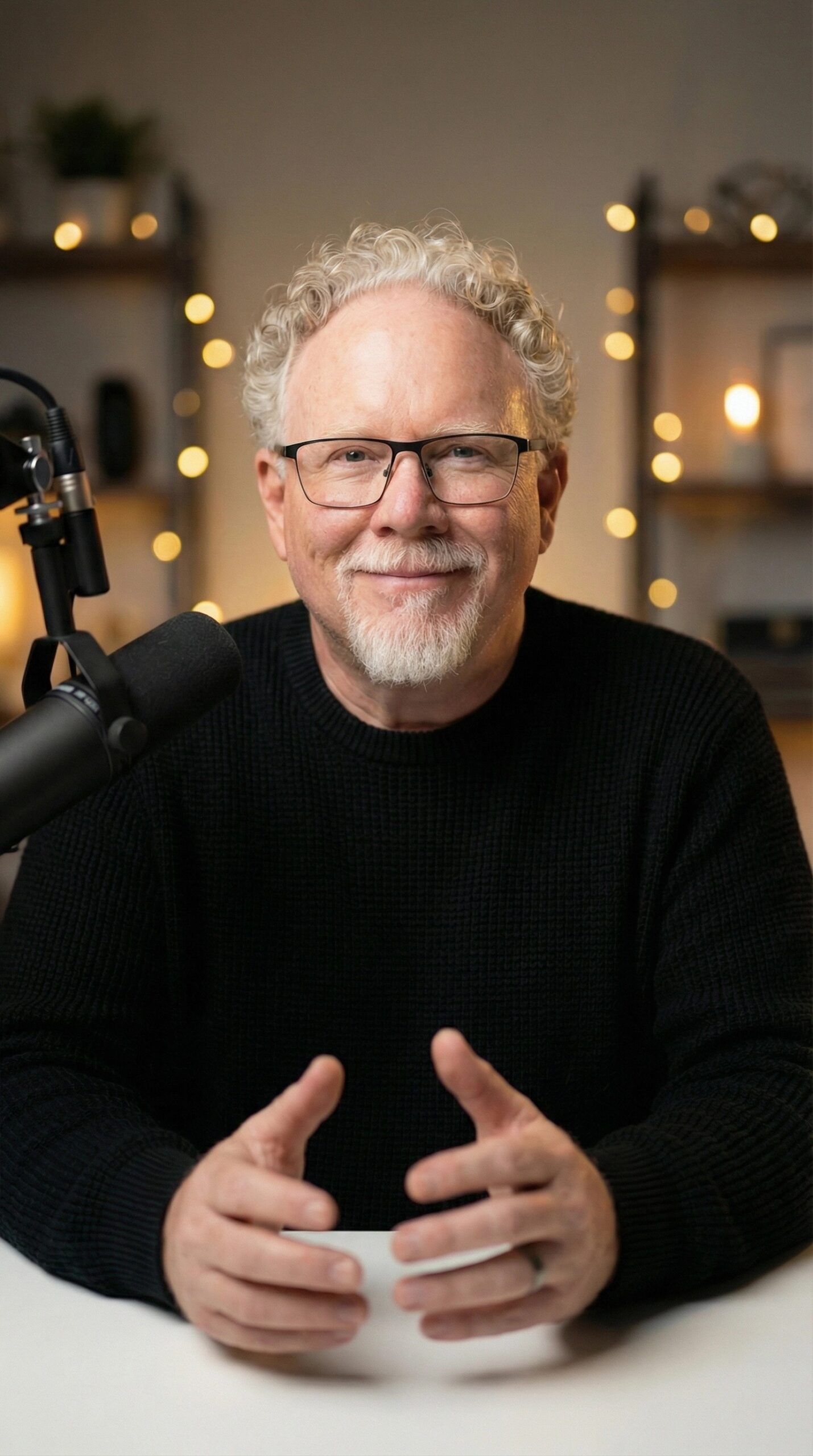
Timothy Shetter, M.S.
M.S. Marriage and Family Therapy · 18+ years with couples · Creator of TRIM and the NaKED Scan
I’ve heard some pretty discouraging stories about marriage counseling over the years.
A wife finally convinces her husband to go. He agrees, although he’s already worried that the counselor will take her side. Forty-five minutes later, he feels like that’s exactly what happened. Or a couple spends six sessions taking turns explaining what the other person does wrong, without ever understanding why they keep getting the same result.
That doesn’t automatically make the counselor incompetent. Working with couples is difficult. But it does raise a question most people never think to ask:
Was this person actually trained to work with the marriage, or primarily with individuals?
Those aren’t the same thing. And a license, by itself, won’t always answer that question.
Four qualifications people often confuse
When you’re looking for a marriage counselor, a string of letters after someone’s name can be reassuring. LPC. LCSW. LMFT. Maybe a certificate from Gottman, PREPARE/ENRICH, or SYMBIS.
But those credentials answer different questions.
- Licensure tells you someone met the legal requirements for a regulated profession. Those requirements and scopes vary by state.
- Graduate education tells you what kind of professional foundation a person studied. Some programs are centered on individual mental health treatment. Others put relationships and systems at the center.
- Method or assessment training tells you someone learned a particular tool or approach. That can be valuable, but it isn’t the same as a graduate specialization.
- Experience and outcomes concern what someone has actually done with couples over time, how they manage difficult situations, and whether they know when their work isn’t helping.
I don’t believe every marriage coach is better than every licensed counselor. Not even close. I’ve met poorly trained coaches, and I’ve known licensed professionals with tremendous insight and skill. My point is simpler: the title is not the whole story.
The difference between two individuals and one relationship
Here’s how I often think about the work.
I have three clients: you, your partner, and the “We” you share. The “We” is my primary client.
That doesn’t mean either individual disappears. It means I want to understand what happens between you.
For example, one spouse presses harder when something feels unresolved. The other feels attacked and shuts down. That silence makes the first spouse push harder. Now each person is reacting to the other person’s reaction, and the pattern has practically taken on a life of its own.
It’s possible to help each individual understand their feelings and still miss the engine that’s producing the conflict.
Marriage is a team sport. If you spend the whole session deciding which teammate is at fault, you may miss why the team keeps losing the same game.
That’s what I mean by a systemic perspective. And it’s a major part of what I was trained to see.
What makes COAMFTE training different?
COAMFTE stands for the Commission on Accreditation for Marriage and Family Therapy Education. It accredits programs specifically organized around marriage and family therapy.
The standards include a relational and systemic philosophy, specialized study, supervised practice, and experience working with relationships rather than only individual problems. Current standards specify at least 300 direct clinical-contact hours in a foundational practice component, including at least 100 relational hours, and at least 100 hours of relational/systemic supervision. [1]
Those are program minimums, not the full extent of an individual graduate’s experience.
I earned my master’s degree in Marriage and Family Therapy through a COAMFTE-accredited program. I also completed approximately 3,000 hours of supervised professional work. Those experiences formed the way I think about marriage.
I wasn’t simply learning another technique for managing conflict. I was learning to watch patterns, understand context, and recognize how two people’s understandable individual responses can create a destructive relationship system.
What about CACREP and professional counseling programs?
CACREP is another major accreditor, and it isn’t fair to treat every CACREP graduate as if they received identical training.
CACREP’s Clinical Mental Health Counseling specialty is designed to prepare counselors for broad mental-health practice. CACREP also has a separate Marriage, Couple, and Family Counseling specialty that explicitly includes family systems and systemic assessment. [2]
That distinction matters.
A 2021 study examined 331 CACREP-accredited clinical mental health counseling programs and found they required an average of 1.1 couple/family-related courses and offered an average of 2.3. The researchers also found that most licensing regulations they reviewed didn’t specify much couple/family training before permitting that kind of work. [3]
To be clear, that study wasn’t a criticism of CACREP’s marriage-and-family specialty. It examined clinical mental health counseling programs.
But it does challenge the assumption that because someone is allowed to offer marriage counseling, they’ve necessarily had extensive training to do it.
A weekend course can be useful. It doesn’t replace a foundation.
I’ve seen a pattern over the years: someone trains as a general counselor, begins working with individuals, and eventually decides to offer marriage counseling. They take a Gottman course or learn PREPARE/ENRICH or SYMBIS and add couples to their services.
I use PREPARE/ENRICH myself. I’m not knocking these tools. They can help couples have conversations they’ve never had before.
But administering a relationship assessment isn’t the same as understanding the relationship that’s producing the scores.
Think of a diagnostic scanner on a car. It’s a great tool. It’ll tell you a lot. But handing someone a scanner doesn’t mean they’ve studied engines.
The Gottman Institute explicitly describes its professional training as something that adds to a person’s education and experience. It isn’t a substitute for professional licensure. [4] PREPARE/ENRICH’s own facilitator training can be completed online in three hours or less. [5]
That’s fine for learning a tool. It just isn’t the equivalent of an entire systemic education or years of supervised work with couples.
And the distinction cuts both ways. A COAMFTE degree doesn’t automatically make someone a master practitioner, either. The foundation matters. So does what a person does with it.
The California wrinkle: even an LMFT license doesn’t tell the whole training story
Here’s a piece of professional history that surprised me when I started looking at the research.
In 2007, the president of the American Counseling Association estimated about 50,000 licensed marriage and family therapists nationally, with roughly 27,000 in California. He also noted that California had historically lacked a separate professional counselor license, so some counselors pursued the MFT credential while retaining their original counselor training and orientation. [6]
California’s separate licensed professional clinical counselor pathway became law in 2010, with the first LPCC licenses issued in 2012. [7]
So when we compare “LMFTs” as a single category, particularly in older research, we should be careful. People carrying the same license may have entered the profession through substantially different educational paths.
That makes educational accreditation worth asking about. It doesn’t mean those practitioners lacked valuable experience, and it doesn’t prove how any individual would perform with your marriage.
A 2011 study of California MFT licensing exams found graduates of COAMFTE-accredited programs performed better than graduates from certain other approved educational pathways. The researchers themselves cautioned that differences in who entered those programs might partly explain the results. Exam performance isn’t the same thing as couple outcomes. [8]
And a 1998 study of experienced AAMFT clinical members found broadly similar practice patterns and client-reported outcomes across practitioners who originally trained in several disciplines. [9] That’s worth taking seriously too. It suggests that what people learn after their original degree matters, and we shouldn’t confuse starting credentials with lifelong competence.
What does the research say about results?
One older comparison of licensure requirements reported that MFT pathways required substantially more family-focused coursework and direct family-therapy experience than other mental-health professions at that time. [10] It measured training requirements, not whether every MFT got better results.
And in a randomized trial of couple therapy, researchers found couples made significantly greater progress when both clients and therapists regularly received feedback about progress and their working relationship. [11]
That second finding interests me a lot. It’s one reason I believe we shouldn’t just keep meeting and assume improvement is happening because the couple returned for another appointment.
In my TRIM Operating System, I want to understand the pattern, build a shared Marriage Map, and keep looking at what’s changing. The relationship itself deserves that attention.
TRIM hasn’t been independently validated by these studies. I’m describing why the principle of ongoing measurement makes sense to me, not borrowing another program’s results as proof of my own.
Five questions I’d ask before hiring someone to help my marriage
Whether the person calls themselves a marriage counselor, therapist, or coach, here’s what I’d want to know:
What graduate-level training did you receive specifically in relationships and systems? Not just general counseling.
How much supervised and subsequent experience have you had actually working with couples? Two individuals in a room aren’t automatically the same as couple-focused practice.
What do you do if one of us feels you have taken the other’s side? Both people need to remain engaged in the work.
How do you decide what to work on first? A pile of complaints isn’t a road map.
How will we know whether we’re making progress? What changes in our relationship would show that the work is helping?
These are fair questions to ask me, too.
Why I chose to work as a marriage coach
After earning my M.S. in Marriage and Family Therapy and completing approximately 3,000 hours of supervised work, I chose not to take the licensing exam or pursue licensure. I continued learning, and I chose to build my work around marriage coaching.
Part of that choice was philosophical. Part was practical. I was already meeting with traveling athletes, musicians, missionaries, and other couples who needed video appointments to stay consistent. The traditional state-by-state licensing model presented real complications for continuity across locations.
And I noticed something else: the word “coaching” felt less threatening to men who were reluctant to agree to “counseling.” It helped some men walk through the door. Once they were there, I brought the same systemic education and years of experience to the work.
You can read more about why I chose marriage coaching.
The question that matters most
Don’t stop at “Are they licensed?” And don’t stop at “Are they certified in Gottman?”
Ask whether this person understands how two people get stuck inside a pattern neither one intended, and whether they know how to help you build a stronger “We.”
If you’re trying to decide what kind of marriage help makes sense, take a look at how my marriage coaching works, then watch the 10-minute Start Here video.
References
[1] COAMFTE. Accreditation Standards, Version 12.5. https://aamft.org/Common/Uploaded%20files/COAMFTE/Accreditation%20Resources/COAMFTE%20Standards%20Version%2012.5%20-%20Published%20August%202021%20-%208.26.21%20%28with%20links%29.pdf
[2] CACREP. 2024 Standards, Section 5-C and Section 5-F. https://www.cacrep.org/section-5-f-entry-level-specialized-practice-areas-marriage-couple-and-family-counseling/ and https://www.cacrep.org/section-5-c-entry-level-specialized-practice-areas-clinical-mental-health-counseling/
[3] Williams, A. E., Weinzatl, O. L., & Varga, B. L. (2021). Examination of Family Counseling Coursework and Scope of Practice for Professional Mental Health Counselors. The Family Journal. https://doi.org/10.1177/1066480720978536
[4] Gottman Institute. Which Level of Training Is Right for Me? https://support.gottman.com/hc/en-us/articles/1260803903089-Which-level-of-training-is-right-for-me
[5] PREPARE/ENRICH. Facilitator Training. https://www.prepare-enrich.com/facilitator-certification/
[6] American Counseling Association, Counseling Today (2007). California and the Future. https://ctarchive.counseling.org/2007/09/from-the-president-california-and-the-future/
[7] California Association for Licensed Professional Clinical Counselors. History. https://calpcc.org/pages/calpcc-history
[8] Caldwell, B. E., Kunker, S. A., Brown, S. W., & Saiki, D. Y. (2011). COAMFTE Accreditation and California MFT Licensing Exam Success. Journal of Marital and Family Therapy. https://doi.org/10.1111/j.1752-0606.2011.00240.x
[9] Simmons, D. S., & Doherty, W. J. (1998). Does Academic Training Background Make a Difference Among Practicing Marriage and Family Therapists? Journal of Marital and Family Therapy. https://pubmed.ncbi.nlm.nih.gov/9677539/
[10] Crane et al. (2010). Comparison of the Family Therapy Educational and Experience Requirements for Licensure or Certification in Six Mental Health Disciplines. The American Journal of Family Therapy. https://doi.org/10.1080/01926187.2010.513895
[11] Anker, M. G., Duncan, B. L., & Sparks, J. A. (2009). Using Client Feedback to Improve Couple Therapy Outcomes: A Randomized Clinical Trial in a Naturalistic Setting. Journal of Consulting and Clinical Psychology. https://pubmed.ncbi.nlm.nih.gov/19634962/
Free · 5 minutes
Take the NaKED Scan
Get a read on how connected your marriage actually is tonight. Take it alone, then invite your spouse and compare.
Start the free scanFree · about 5 minutes · take it alone first
The full picture
Book a Marriage Review
Both of you assess separately. Then we map the whole marriage together, and I tell you honestly what help I think you need, even if it isn't me. Start with the 10-minute video. It explains the Review, and you can book from there.
Watch the video first$350 · 90 to 120 minutes · both partners