

Timothy Shetter, M.S.
M.S. Marriage and Family Therapy · 18+ years with couples · Creator of TRIM and the NaKED Scan
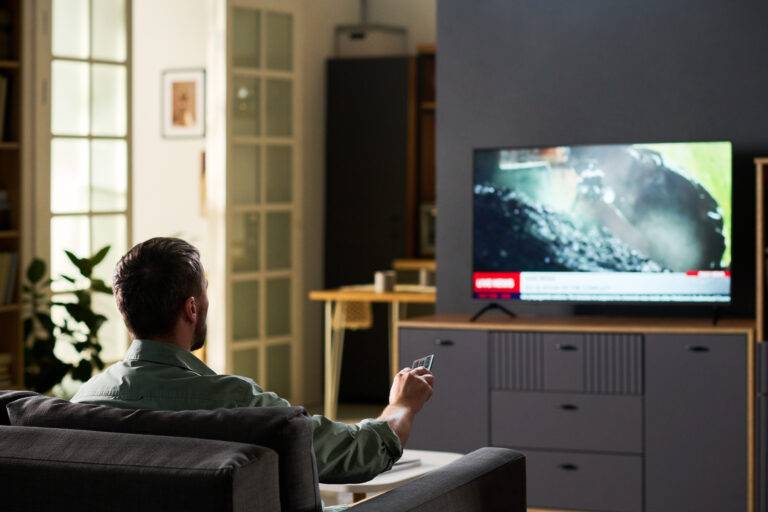
It’s 9:15 on a Tuesday. The kids are down. The dishwasher is running. He’s on one end of the couch clearing the last few emails. She’s in the chair across the room, scrolling. The TV is on, but nobody’s really watching it.
Nobody is angry. Nobody is unhappy, exactly. But if you stopped either one of them and asked how close they felt to the person in that room, you’d get a long pause.
I’ve spent eighteen years sitting with couples in that pause.
Most of them are doing life well. Careers are moving. Bills are paid. Kids are cared for. The house runs. On paper, and to everyone watching, they look fine.
Then the evening comes, and something feels off that neither of them can quite name.
A lot of couples decide this is just what a long marriage becomes. Others run into the idea of “parallel play” for grown-ups and feel relief. Finally, permission to be in the same room without performing togetherness.
I think there’s something real in that. Healthy independence exists, and I want more couples to have it.
But it hides something I’ve watched end marriages.
Because what ends them usually isn’t healthy parallel play. It’s something that looks nearly identical from the doorway and runs on a completely different engine.
I call it Parallel Avoidance.

Parallel Avoidance is when two people keep sharing a house, a bed, and a schedule but have quietly stopped sharing themselves. Nearness standing in for closeness.
Put simply:
HEALTHY TIME TOGETHER SAYS
“We’re together, and we’re good.”
PARALLEL AVOIDANCE SAYS
“We’re together, but I still feel alone.”
That second one is one of the most confusing versions of being lonely in marriage. You’re not physically alone. You just feel emotionally alone in the one place you shouldn’t.
Parallel play isn’t the problem
Healthy parallel play is wonderfully ordinary.
One of you reads while the other tinkers with a project. One watches the game while the other finishes a book. Nobody feels ignored. Nobody is keeping score. Nobody is lying there wondering if they still matter to the person beside them.
The quiet feels like rest.
There’s no pressure to manufacture closeness, because the closeness is already there. That’s the whole difference. The silence is peaceful because the two of you are good, and you both know it.
A strong marriage doesn’t need constant talking. You don’t have to wring meaning out of every minute in the same room. Space isn’t the enemy. Handled right, a little independence makes the “we” stronger.
And to be honest, parallel play isn’t even the highest form of this. There’s a version where two people are doing completely separate things across the room and still feel actively connected. Not just comfortable near each other. Genuinely close while apart. That’s a different article. For now, the line that matters most is the one between resting near each other and quietly hiding from each other.
But that only holds when it’s sitting on top of something real.
Parallel Avoidance wears the same clothes
Here’s where good people get fooled.
Parallel Avoidance can look exactly like parallel play. Same couch. Same room. Same quiet. Different engine underneath.
The quiet isn’t rest anymore. It’s retreat. Both people have slowly stopped reaching for each other, and neither one said a word about it. Nobody announced they were done trying. It just happened, one ordinary evening at a time.
FROM PRACTICE · DETAILS CHANGED
I sat with a couple a while back, together sixteen years, both sharp, both good at their jobs, the kind other people point to as having it all together. About twenty minutes in, the husband said, “We don’t fight. I honestly don’t know why we’re here.” His wife kept her eyes on the floor and said, “That’s the thing. We don’t do anything anymore.” He’d been counting the peace as proof they were fine. She’d been sitting in the same room feeling like she lived alone.
Same couch. Two completely different marriages.
Stop asking if it’s okay. Ask what it’s making.
One of the most common mistakes I see is couples grading the behavior instead of the result.
They ask, “Is it fine that we both just do our own thing at night?”
That’s not the question that helps.
The better one is the question I ask in almost every first session: what is this pattern producing between us?
Your marriage is never sitting still. It’s always making something.
More trust, or more guessing. More warmth, or more dead air. More reaching, or more retreat.
Two couples can spend the identical evening, same activities, same silence, and walk into two completely different marriages. The activity was never the point. What it’s growing between you is.
Roommate drift usually shows up quiet, not loud
Most people picture a marriage falling apart in fights. Sometimes it does.
But I’ve sat with plenty of couples who barely argue anymore. They didn’t blow up. They just stopped building.
They still run the operation beautifully. Calendars, kids, work, vacations, the whole division of labor. From the outside, rock solid.
Inside, one or both of them feel increasingly unknown.
That’s the part people miss. A marriage can keep working long after it stops being close. Everything functions. The two of you just quietly quit growing toward each other and started coexisting efficiently instead. That’s how you become married roommates. Not because the love died. Because you swapped closeness for logistics and never noticed the trade.

The marriage is built on ordinary Tuesdays
People assume the good stuff gets built on vacations, anniversaries, and date nights. Those matter. But they’re not where most marriages are actually made.
Marriages are made on ordinary Tuesdays.
The small conversation. The quick check-in. The laugh in the kitchen. Looking up from your phone when your spouse starts talking. Feeling noticed. Feeling remembered. Feeling picked, again, on a normal day.
KEY TAKEAWAY
Shared air doesn’t build a marriage. Shared presence does.
Miss enough of those small moments and something shifts. Not overnight. Slowly. The marriage starts expecting less, because less is what it keeps getting. Two people quietly train each other to stop reaching.
One honest test
Here’s a question I sometimes hand couples.
Picture the power going out. TV off. Wi-Fi gone. Both phones dead. Just the two of you and the quiet.
Would that evening feel easy? Or would it feel awkward?
Healthy parallel play survives the silence. It might even enjoy it.
Parallel Avoidance usually needs the distractions. The screens aren’t the real problem. They’re the thing keeping both people from noticing how far apart they’ve drifted.
I don’t say that to pile on guilt. I say it because it hands you clarity, and clarity gives you somewhere to go.
What goes first is being seen
When a couple slides into Parallel Avoidance, the first thing to go usually isn’t affection. It’s being seen.
Not because either person is cruel. Because attention slowly turns into transaction. Conversations shrink down to logistics, requests, updates, who’s got the pickup. The household keeps humming. The two people inside it feel less and less known.
That’s why it’s so confusing to live in. Nothing terrible happened. Something essential just quietly stopped happening. Peace and closeness are not the same thing, and a lot of couples find that out late.
Couples often drift into low-risk relating
Another related avoidant pattern I see all the time is what I’d call low-risk relating.
Couples stop engaging in ways that require too much.
Too much honesty.
Too much vulnerability.
Too much emotional exposure.
Too much possibility of friction.
So they keep things safer.
They talk about schedules.
Kids.
Tasks.
Bills.
Shows.
Travel plans.
What needs to get done next.
And yes, some of that is normal. Real marriages have logistics.
But when logistics become the main form of connection, the relationship starts to thin out.
The marriage becomes functional, but not deeply connected.
That’s often how drift happens.
Not through one giant blowup, but through a long stretch of low-risk relating.
A lot of marriages don’t explode. They slowly get bleached of color.
Everything stays manageable.
Everything stays civilized.
Everything stays fairly calm.
But not much is getting built.
Polite is not the same thing as intimate. Safe can quietly become sterile.
Why risk matters in real connection
Here’s one way I explain that to couples.
Sometimes I ask people if they remember any radio personalities, newspaper columnists, or news voices from years ago.
Usually they stop and think for a moment and then say something like, “Oh yeah, I remember so-and-so,” or “I remember my dad listening to Rush Limbaugh on the radio.”
Then I ask a second question.
Can you name the person who gave the traffic report this week? Or the weather report? Or the person on the radio you’ve heard almost every day on the drive home lately?
Usually they can’t.
And that’s interesting, because both people gave you information. Both reported the news. Both showed up in your life in some way.
So why do you remember one and not the other?
Because one was mostly just giving you the facts.
The other was giving you something more personal.
They told you what they thought.
They told you what they felt.
They revealed perspective.
They took a risk.
That’s what made them memorable.
It wasn’t about whether you agreed with them. It’s that they were not neutral. They were not trying to be forgettable. They risked friction. And because of that, people remembered them.
And that’s part of what makes relationships feel alive too.
When all a couple does is exchange facts, updates, and logistics, they may be communicating, but they are not necessarily letting each other know them.
True connection requires a higher level of risk.
It requires telling someone what you actually think.
What you actually feel.
What matters to you.
What scares you.
What you are carrying.
What you long for.
And yes, that creates the possibility of discomfort.
The other person may not like it. They may disagree. It may stir conflict.
But conflict is not always the enemy.
Handled well, conflict creates the opportunity for deeper honesty, deeper understanding, and deeper connection.
Avoiding conflict for fear of discomfort almost always guarantees something else instead.
You drift into parallel lives.
And if that goes on long enough, eventually the paths diverge.
Better questions than “whose fault is this”
If any of this is landing, resist the urge to figure out who’s to blame. That’s almost never where things get better.
Ask instead:
What are the two of us reinforcing right now? What does our normal Tuesday night actually produce between us? Have we started calling peace closeness when they aren’t the same thing? Are we still building the “we,” or just running the house?
Those questions don’t accuse anybody. They show you the truth. And seeing it clearly is usually where change starts.
Independence should feed the marriage, not replace it
I hope more couples build real independence. You don’t have to talk every minute to be close. You don’t have to perform togetherness. Healthy space gives you both room to breathe precisely because the marriage already feels safe.
Parallel Avoidance does the opposite. It slowly teaches two people to live beside each other without ever really meeting.
From across the room, the two look almost identical. Inside the marriage, they’re worlds apart.
If you’re not sure which one you’re living in
If you’ve been wondering whether you’re resting in a good marriage or quietly drifting toward roommates, don’t guess. Guessing is how couples lose years.
That’s why I built the free NaKED Scan.
It’s a private relationship check-up, and it takes only a few minutes. It measures the four things every healthy marriage actually runs on: whether you feel seeN, Known, accEpted, and loveD. You’ll get your personalized NaKED Score and a straight, honest read on where you and your spouse stand right now.
Start here: take the free NaKED Scan.
SAY THE QUIET PART
Sometimes the most important move in a marriage isn’t trying harder. It’s finally seeing the thing you’ve been living inside.
And if your Scan shows the two of you have quietly drifted, a Marriage Review & Road-Mapping Session is the natural next step. We sit down, look at what’s driving it, and map what it would take to start building the “we” again.
Frequently Asked Questions
Is parallel play healthy in a marriage?
Yes. Healthy parallel play can be a sign of a secure relationship. It simply means two people are comfortably sharing the same space while each enjoys their own activity. There isn’t pressure to constantly interact, because the marriage already feels close.
The key isn’t whether you’re doing separate things. It’s whether that time leaves you feeling closer, emotionally neutral, or increasingly disconnected. The same behavior can produce very different outcomes depending on the health of the marriage it’s sitting inside.
What is the difference between parallel play and roommate syndrome?
From the outside, they can look almost identical. Two people in the same room, each doing their own thing.
The difference is what that time is producing between you.
Healthy parallel play grows out of a marriage that already feels close. It’s rest between two people who still feel connected to each other.
Roommate syndrome grows out of drifting apart. The quiet stops being a break and starts being the norm. Over time the marriage becomes more functional than close, and two people end up living alongside each other instead of building the “we.”
Why do I feel lonely even though my spouse and I spend so much time together?
Time together and closeness are not the same thing.
Plenty of couples share the same home, the same schedule, and even the same couch while slowly drifting apart. Conversations shrink down to logistics. Curiosity fades. The small moments of attention stop happening.
Feeling lonely in a marriage usually has less to do with how much time you spend together and more to do with what that time is producing between you.
Can a marriage survive emotional distance?
Yes, but emotional distance rarely improves on its own.
Most couples don’t wake up one day completely disconnected. They drift there through small habits that slowly become normal. What starts as convenience or exhaustion can quietly harden into real isolation if nobody names it.
The encouraging part is that this can change. The first step is seeing it clearly instead of assuming this is just what a long marriage looks like.
How do you know if you’re becoming married roommates?
There isn’t one defining moment. It’s usually a gradual shift.
You may notice your conversations revolve almost entirely around schedules, responsibilities, kids, finances, and household tasks. Conflict may even decrease, but so does curiosity, affection, and presence.
A marriage can stay highly functional while quietly becoming emotionally thin. That’s why it’s worth asking not just whether things are peaceful, but whether you’re still intentionally strengthening the marriage.
Is it normal for couples to want time apart?
Absolutely.
Healthy marriages make room for individuality. Time alone or separate interests aren’t signs of a struggling relationship. Often they strengthen it.
The important question isn’t whether you spend time apart. It’s whether that independence exists inside a marriage that still feels responsive, safe, and close. Independence strengthens the “we” when it grows from security rather than distance.
What causes emotional drift in a marriage?
Emotional drift usually builds up over time instead of arriving all at once.
Busy schedules, career demands, parenting, phones, chronic stress, old disappointments, and one missed moment after another can all slowly wear a marriage down. Couples rarely choose to drift apart. They just stop noticing the small moments that used to keep them close.
Disconnection rarely begins with hostility. More often it begins when building the marriage quietly gives way to just keeping life running.
How can we tell where our relationship actually stands?
Many couples wait until a crisis before asking that question. A better move is to get clarity before things get urgent.
The free NaKED Scan is a private relationship check-up that helps you see what your day-to-day is actually producing between you. It measures the four experiences every healthy marriage depends on: feeling seeN, Known, accEpted, and loveD, and gives you a personalized NaKED Score.
Sometimes the most valuable insight isn’t discovering something new. It’s finally putting words to what you’ve been living inside.
Free · 5 minutes
Take the NaKED Scan
Get a read on how connected your marriage actually is tonight. Take it alone, then invite your spouse and compare.
Start the free scanFree · about 5 minutes · take it alone first
The full picture
Book a Marriage Review
Both of you assess separately. Then we map the whole marriage together, and I tell you honestly what help I think you need, even if it isn't me.
Book the session$350 · 90 to 120 minutes · both partners